The Osages' great journey to France
1827–1829: from the Osage River to Le Havre, from Paris to Montauban.
The Osages cross the Atlantic
In 1827, in an Osage village on the banks of the Osage River in the heart of Kansas, a group of women and men prepared to undertake an extraordinary journey: to reach France, that distant land, once an ally, which the elders remembered with respect and curiosity.
For four years these Osages had been gathering beaver, fox and bear pelts – their only wealth, which they intended to trade for a passage across the Atlantic, which they called "the Great Water". The expedition took shape: a dozen determined volunteers built rafts, gathered their belongings, weapons and provisions, and set off.
Their journey began down the Missouri River. The aim was to reach New Orleans via the Mississippi and then board a ship for Europe. But shortly before reaching St. Louis, disaster struck: the rafts capsized in the rapids and the carefully stored furs were lost. Most of the group saw this as a bad omen and gave up the adventure.
Only six refused to give up.
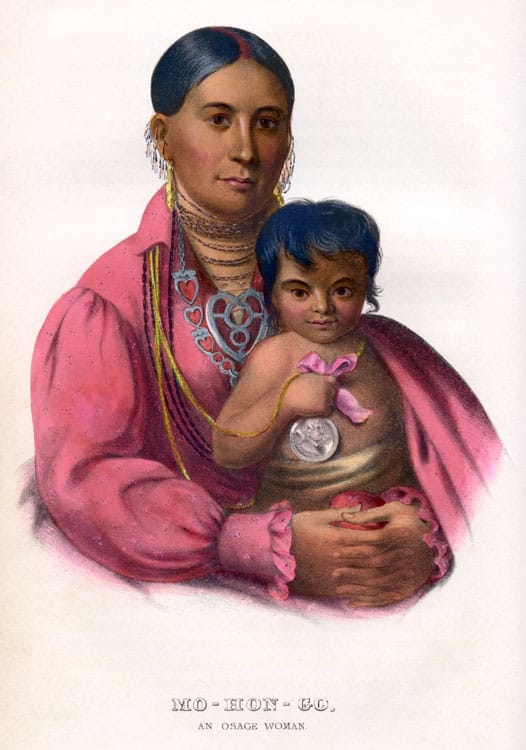
- Ki-He-Kah-Shinkah, known as Little Chief, guides the group with calm and authority;
- Gthe-Do'n-Wi'n, Hawk Woman, his wife, embodies dignity and quiet strength;
- Washinka-Sabe, Black Spirit, a warrior;
- Mi-Ho'n-Ga, Sacred Sun, his young wife, nineteen years old;
- A-Ki-Da-Tonkah, Great Soldier, the village herald;
- Minckchata-hooh, Young Soldier, the youngest.
In St. Louis, then a mere town at the confluence of the Missouri and the Mississippi, the Osages met David Delaunay, a Frenchman wearing the uniform of a colonel in the American army. Interested in their story and aware of the media potential of their presence in Europe – in the midst of the Romantic era, when exotic tales fascinated readers – he offered to finance their crossing. In return, they would accompany him to France, where he planned to present them to the public.
The Osages accepted. Together they travelled down the Mississippi aboard a steamboat to New Orleans, then boarded a sailing ship, the New England, bound for Le Havre. It was the end of June 1827. Six members of the Osage nation were now sailing into the unknown, carrying an ancient memory and a bold dream: to find the French, those "allies of old", and to renew a past both mythical and very real.
Arrival in the land of the French: July 1827
On 27 July 1827, under a blazing sun, the New England docked in Le Havre. The whole town was in uproar. The day before, the rumour of the imminent arrival of American Indians had spread like wildfire. That day, forty thousand people – the entire population of Le Havre – gathered on the quays, balconies and rooftops, even in the rigging of ships.
On the deck, the four Osage warriors appeared, motionless and proud. Bare-chested, their skin gleaming in the light, their faces painted red and green, they were commanding. Their heads, shaved except for a crest adorned with eagle feathers, added to the striking picture. Silver bands encircled their arms and beaded necklaces hung round their necks. The two women wore their finest traditional dress in bright colours, their hair carefully arranged down their backs and decorated with feathers.
It took a long time to get them off the ship, the crowd was so dense. They were taken to the Hôtel de Hollande for their first night in France. Their first visit was to the mayor, who received them according to the French tradition whereby every official speech must be properly washed down. The Muscat de Rivesaltes served that day gave Great Soldier a lively time, as he had overindulged a little.
The following days were filled with receptions, demonstrations and festivities: carriage rides, military parades, horse-riding displays, "amusing" physics experiments, banquets and gifts… French women were fascinated by the two young Indian women, to whom they offered jewellery and toiletries, which were accepted with emotion.
Rouen
On 7 August, the six Osages, dressed for the occasion in blue frock coats, boarded the steamboat Duchesse d'Angoulême to sail up the Seine. First stop: Rouen. There too, enthusiasm was at its height. Once again, forty thousand people waited patiently in front of their hotel or around the theatre.
The press seized on the story. Le Moniteur of 12 August wrote:
The six Indians are all the rage in Rouen. The crowd constantly besieges the hotel where they are staying. On 8 August they went to the show in an open carriage and, in costume, in the governor's box… After the first act the prince stood up and delivered, in his own language, many things no doubt very pleasant but of which we understood nothing…
Interest was such that even their silence was fascinating. People commented on their gestures, their bearing, their gaze. Rouen kept them for only five days. On 13 August the Osages boarded the "vélocifère" coach for Paris.
Paris: from the king's court to the theatres
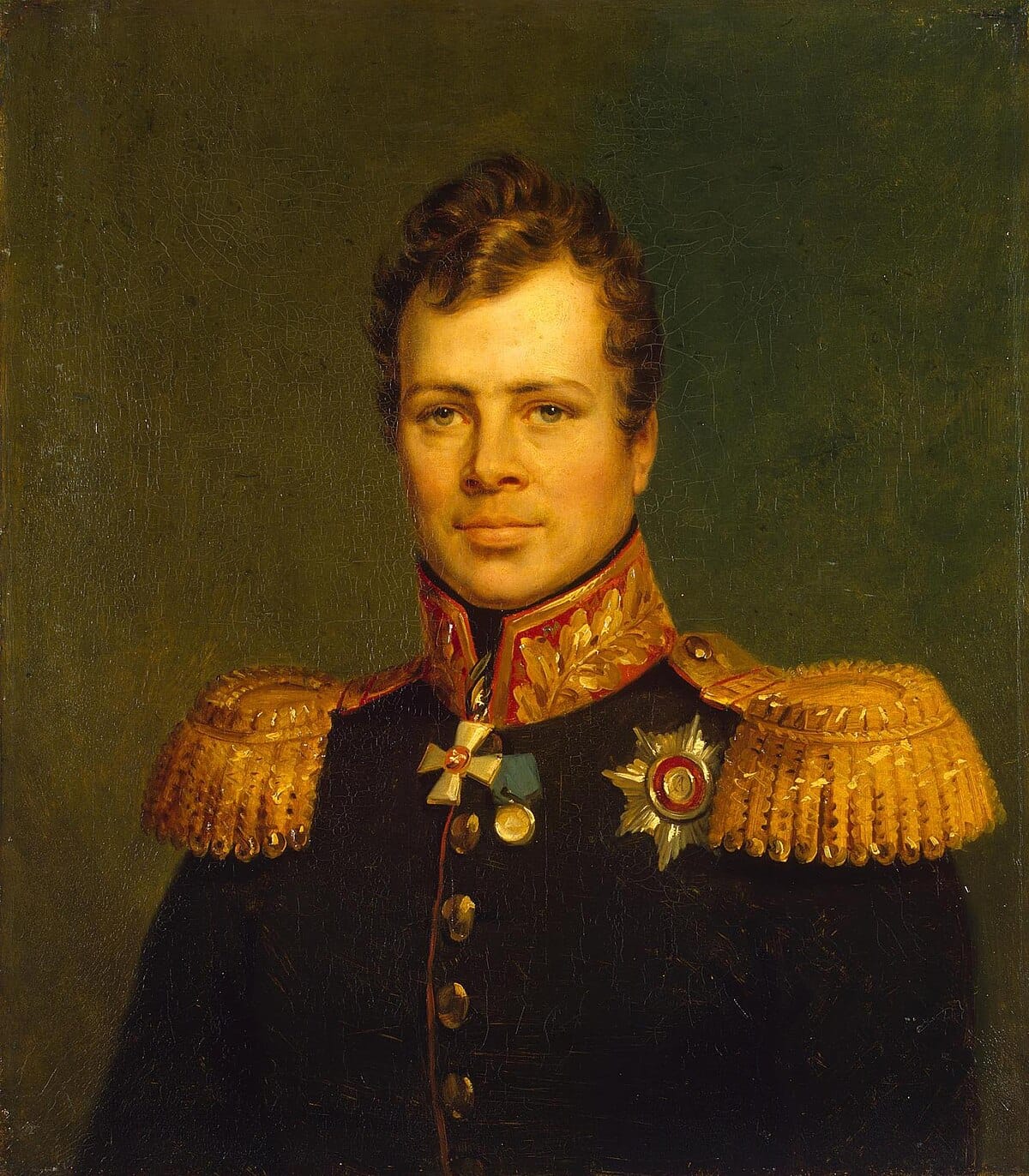
Their first outing in Paris was to visit the Baron de Damas, minister of foreign affairs, who had invited them to a sumptuous forty-cover dinner. Impressed by the splendour and elegance of the surroundings, the Osages were received with all the honours due to distinguished guests.
Two days later, on 21 August, they went to the court at Saint-Cloud, where they were presented to His Majesty Charles X and the princes of the royal family. Dressed in their finest traditional attire, they offered an exotic and fascinating spectacle to the French court.
Once these official duties were over, the Osages became prey to a Parisian public hungry for novelty and sensation. The shrewd Delaunay, always on the lookout for opportunities, placed a notice in the newspapers saying that the entry letters required to be received by the Indians could be obtained – for a fee. The initiative, though criticised by some, drew a crowd of curious visitors.
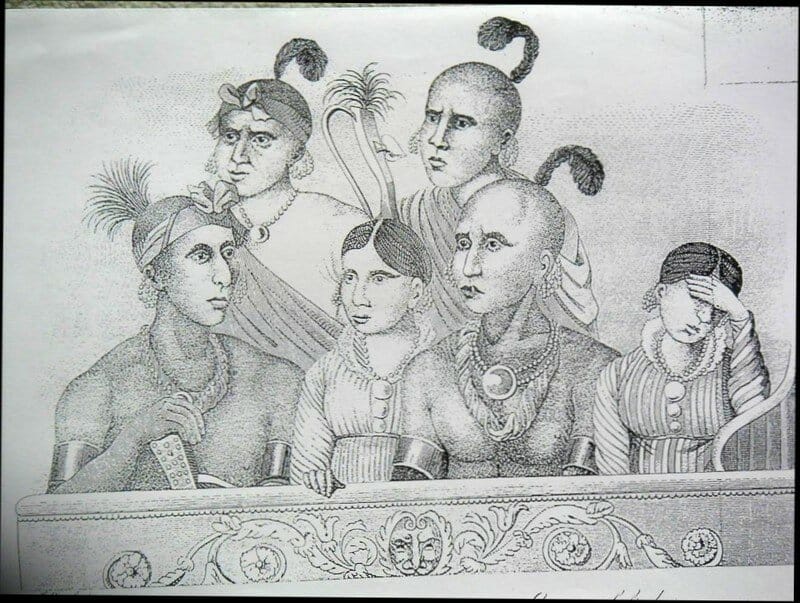
At the same time, theatre directors competed for the privilege of hosting the Osages, whose advertised presence unfailingly filled the house, whatever the show. They were taken in turn to the Opéra, the Gaieté, the Nouveautés, the Variétés and the Odéon. Le Figaro wrote mischievously: "Theatre directors have each just placed an order for six savages for the prosperity of their establishment."
At Tivoli, the Osages were the stars of several "extraordinary festivals". They were also seen at the water festivities of Bercy, at the waxworks, where they could see their sculpted lookalikes, at the military exercises of Vincennes, and at the Jardin du Roi, where they marvelled at the famous giraffe, the attraction of the day.
A sweet madness seized the Parisians. In the cafés they served "Osage punch", and high fashion launched woollen "Osagiennes" or "Missouriennes", inspired by the visitors' traditional dress. Osages were in fashion – though only briefly.
Wandering across Europe
At the end of October, the press stopped talking about the Osages. Soon afterwards, Delaunay, recognised as a swindler by a former victim, was thrown in prison. Left to their own devices, the Osages did not know how to get home. They took to the roads of France, wandering aimlessly.
In spring 1828, their trail was picked up again in Belgium. In Liège, young Sacred Sun gave birth to twin girls, one of whom was adopted by a local woman. On 1 January 1829 they were found abandoned and starving in Freiburg im Breisgau. After that they wandered through Germany, the Netherlands, Switzerland and as far as Italy.
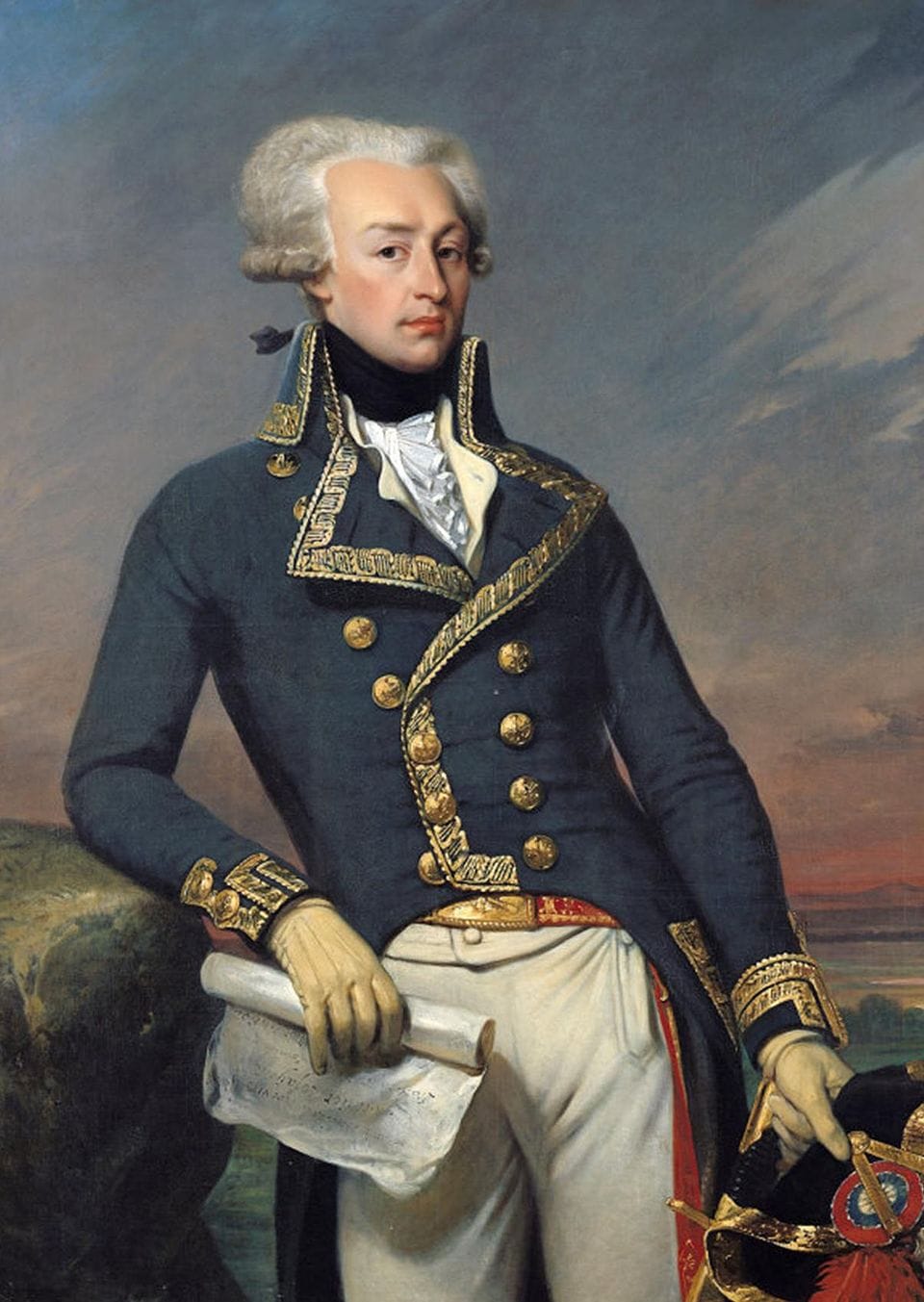
Eventually they split into two groups, probably following a disagreement about how to get home. Some wanted to ask La Fayette for help and headed for Paris. The others counted on Bishop Louis-Guillaume Dubourg, former bishop of Louisiana, based in St. Louis, from where he sent evangelical missions to the Plains Indians. The Osages knew him well, and many in their tribe had been baptised. They had learned that Bishop Dubourg had been appointed to the diocese of Montauban, in south-western France.
The rest of their journey – the arrival in Montauban in November 1829 – is told on the page 1829: the Osages in Montauban.
And the other three?
They ended up in Paris in September 1829, where the United States consul general, Mr Barnet, helped by La Fayette, housed and fed them. La Fayette, ever concerned for the fate of others, made sure they were treated with dignity and respect. In the end, he was able to put them on a ship at Le Havre for their long-awaited return.
But at the very moment of their departure, all their belongings were seized by creditors as security for debts incurred in their name by their dishonest manager. It was a heavy blow for the Osages, who thus lost everything they had acquired during their stay. Worse still, two men died of smallpox during the voyage, leaving young Sacred Sun to return alone to her homeland with her baby.
A memory passed down
Back in their village, the Osages told of their adventures and misadventures. Their two and a half years in France had left deep marks on their minds. The story did not die with those who lived it, but outlived them through oral tradition, handed down from generation to generation with great fidelity.
The story was first written down in 1929 in the Missouri Historical Society Bulletin. It was later taken up in the French magazine Historama (no. 40, June 1987) in an article entitled "Des Peaux-Rouges à Paris" by Guillaume de Bertier de Sauvigny, to which the part of this account that takes place in France owes a great deal.
But the story does not end there: find out what became of the Osage nation in the Osage Nation section.