The Osages, a powerful nation
A powerful nation in the heart of America.
The Osages are a southern Native American tribe, members of a group called Dhegiha that also includes the Ponca, Omaha, Kaw (Kansas) and Quapaw (Arkansas). These tribes speak closely related languages, share the same traditions and have always been allies.
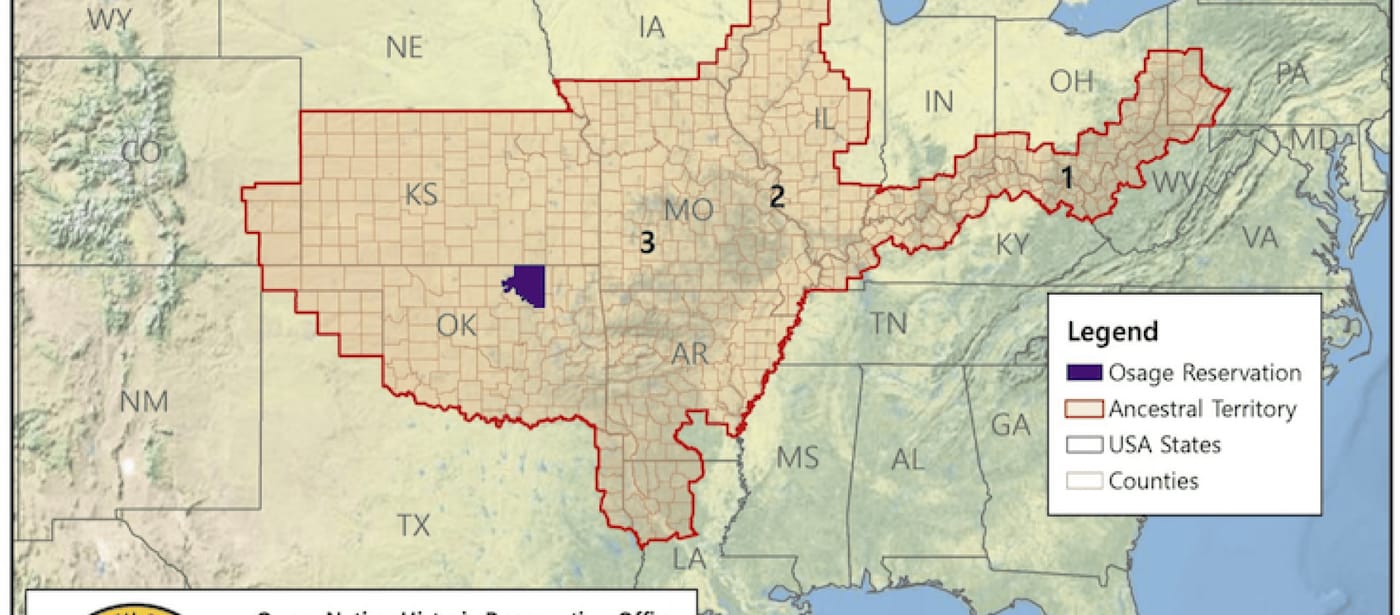
At the time of the French colony of Louisiana, their hunting territory was immense, comparable to the size of France, covering parts of what are now Missouri, Kansas, Oklahoma and Arkansas. They controlled a strategic spot – the confluence of the Missouri and the Mississippi – which allowed them to command trade on these great rivers.
Impressive warriors
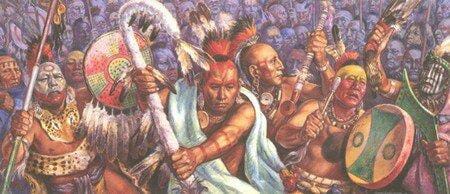
Osage warriors were impressive, often very tall and tattooed. They wore bone necklaces, bracelets and earrings, and had a distinctive hairstyle with a crest on the head decorated with feathers during ceremonies. The women were also renowned for their beauty, dressed in colourful gowns and adorned with jewellery of bone and shell.
A semi-nomadic way of life
Their way of life combined farming (mainly practised by women and children) and hunting (reserved for men). They were semi-nomadic: they lived in villages near rivers but twice a year left for the great buffalo hunts. The rest of the time, hunters caught other animals and practised trapping. The fur trade was important, and they jealously defended their territory, which often led to conflicts, raids and wars.
Allies of the French
The Osages were formidable and respected warriors. The French quickly understood that they had to ally with them to control the region. French trappers paid tribute to the Osages, especially to the women, whom they often married. These trappers adopted their customs and had many mixed-heritage children, whose descendants still bear French names such as Labadie or Larose.