French Louisiana
A colonial territory larger than the mother country.
Louisiana
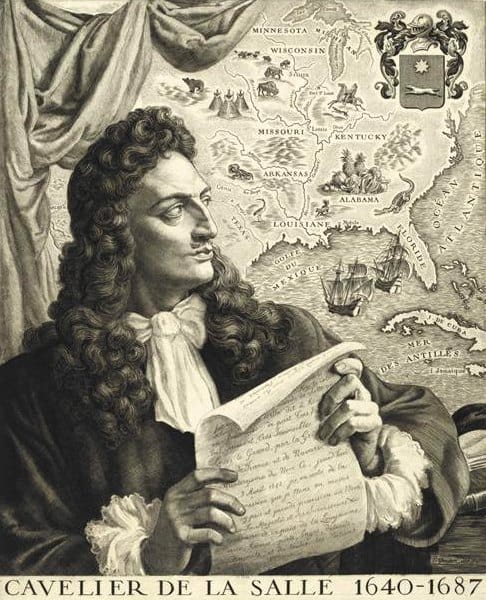
In 1682 Robert Cavelier de La Salle, a French explorer, retraced Marquette's route and travelled the whole length of the Mississippi down to the Gulf of Mexico. Impressed by the immensity of the territory, he named it "Louisiana" in honour of King Louis XIV, the Sun King. The territory officially became a French colony, even though local peoples such as the Wha-Sha-She (Osages) did not know that they were now considered subjects of the King of France.
Louisiana was immense, stretching from the Great Lakes to the Gulf of Mexico and from the Mississippi to the Rocky Mountains. In reality, however, the colony was very hard to control: few soldiers and many coureurs des bois (French adventurers) who preferred freedom, nature, trade with the Indians and adventure to obeying a distant king.
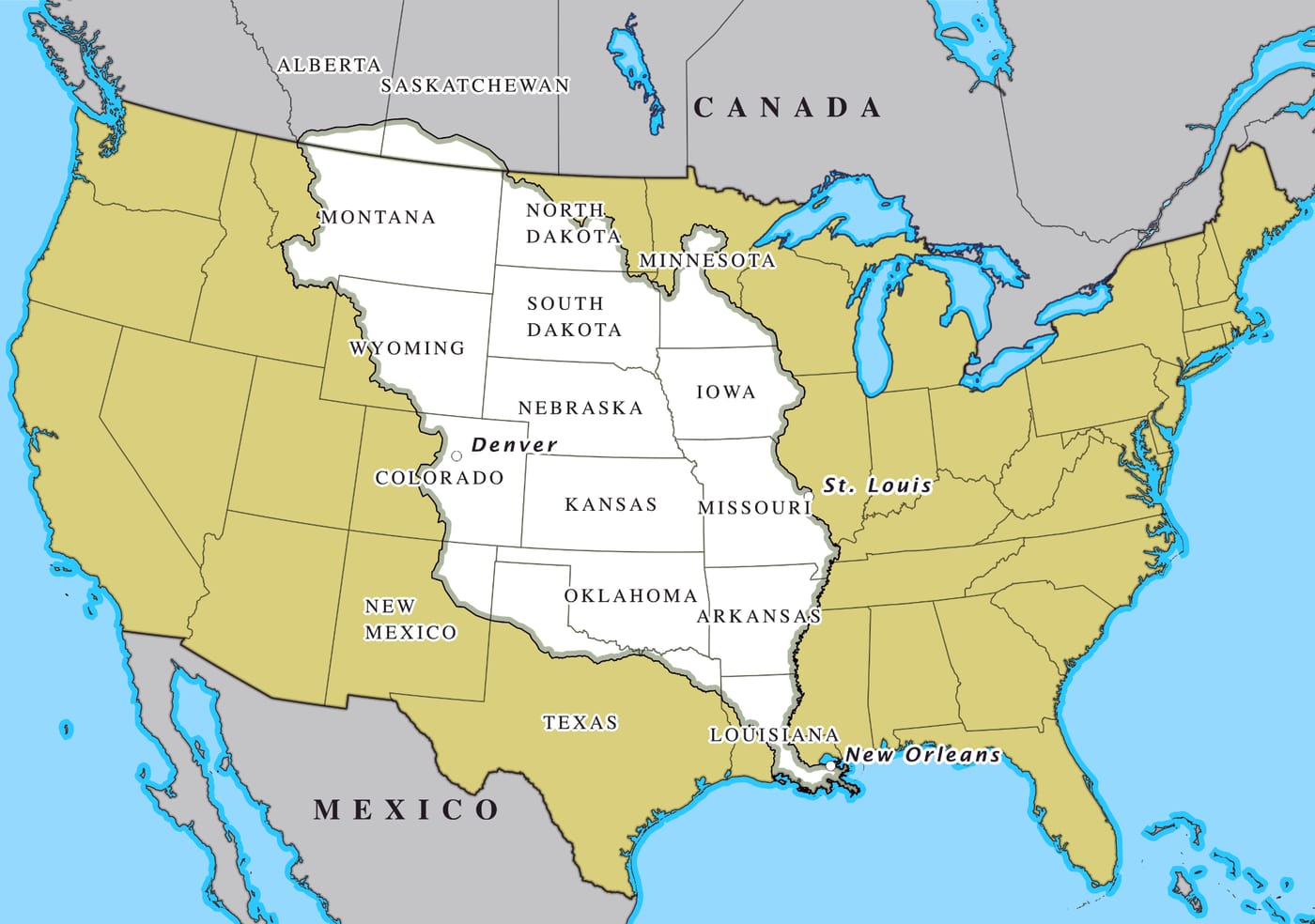
In this colony the French forged alliances with Native nations, foremost among them the Osages, who controlled the confluence of the Missouri and the Mississippi.
Occitans in America
Occitans left many traces of their passage in America: the city of St. Louis, founded by the Béarnais Baron de Laclède; the city of Detroit, founded by the Tarn-et-Garonne native Sieur de Lamothe-Cadillac (after whom the Cadillac brand is named); the Gasconade River, and many more…
The Louisiana Purchase
Louisiana passes into American hands
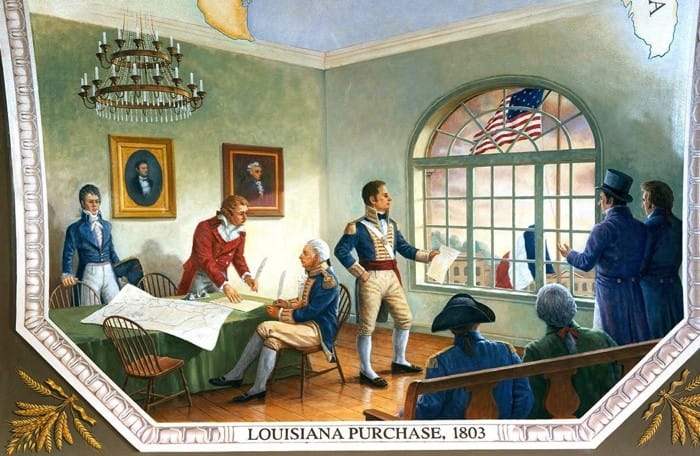
In 1803, Napoleon Bonaparte, then First Consul (not yet emperor), wanted to finance his ambitions in Europe. The colony of Louisiana, too far away, hard to govern and costly in soldiers, no longer interested him. On Talleyrand's advice, he offered to sell it to the United States.
American President Thomas Jefferson, a former ambassador to Paris during the Revolution, was astounded by the offer: for 15 million dollars he bought the whole of Louisiana, doubling the size of the country. The United States now stretched to the Rocky Mountains.
But the sale was made without consulting the local populations. The Plains Indians, the Osages among them, became American without knowing it. And their descendants would not receive citizenship until 1929!
The French, no longer present in the region, lost interest. This saddened some Osages, who had been allied with them. A group of Osages led by Chief Ki-He-Kah-Shinkah ("Little Chief") then decided to go to France, as if they were going to "visit their tribe", marking the start of a great adventure.